Winter in the Tower's Shadow: A Local Angle on Seasonal Traditions and Memory
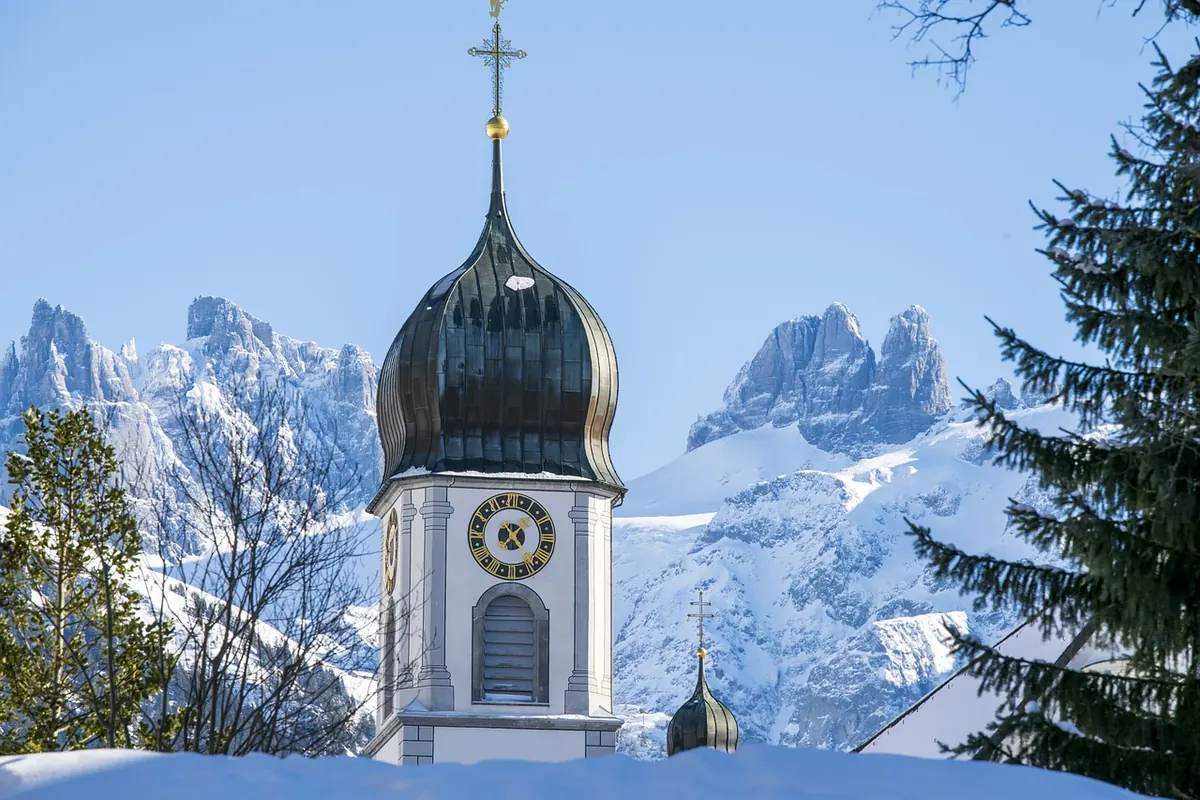
The tower looks different in January. In summer it is a photograph: people stop in the piazza, raise a phone, walk on. In winter it becomes something closer to a neighbour — something you check on. You notice which windows are lit behind it, how the frost sits on the stone until nearly eleven, how the bell carries further when the air is cold and the leaves are gone. The streets below it shrink and rearrange themselves, and the customs that fill those streets are quieter than the ones we photograph. They are also older.
What follows is a walk through the season as it is actually lived under the tower: the sounds that organise the day, the corners that change in the cold, the food that comes back every year, and the people who keep the memories. Some of it is practical. All of it is worth writing down.
When the Bells Set the Day
Winter gives the tower a job it does not have in summer. In the warm months the bell is background noise, drowned out by traffic and conversation. In December and January, with the shutters closed and the streets empty by half past four, it becomes a piece of infrastructure again.
People who have lived here a long time can tell you what the different rings mean — the hour, the quarter, the call that used to mark the end of work in the fields and now marks nothing in particular, yet still gets people glancing up. The sound travels differently in cold air. Stand in the lane behind the church at dusk and you can hear it arrive a half-second after you see the bell move.
That small detail is a good place to start if you want to understand the season here. Winter does not add customs to the neighbourhood so much as restore the old ones to working order.
The Streets Winter Rearranges
Cold weather redraws the map. Ask anyone over seventy and they will tell you which side of which street to walk on in January — where the wind funnels between two buildings, where the drain overflows and freezes into a sheet across the pavement, where the north-facing steps stay slick until noon. None of this is written anywhere. It is passed along in doorways and at the bakery counter, and it is exactly the kind of local knowledge that disappears when nobody repeats it.
The evening walk changes too. The long loop around the outside of the walls, popular from spring onward, is abandoned by early December in favour of a shorter circuit: piazza, arcade, the sheltered stretch past the old shops, home. People walk closer together. Conversations that in June would happen standing in the open happen in doorways, with hands in pockets and a foot holding the door.
If you want to see the neighbourhood as it understands itself, take that short winter loop one evening just after the lights come on. Notice who stops to talk, and where.
Smoke, Chestnuts, and the Kitchen Table
The smell of the season is not complicated. Wood smoke from a few chimneys that still burn it. Chestnuts on a brazier near the corner of the piazza, turned with a scoop, sold in a paper cone that immediately becomes too hot to hold. Wet wool. The specific cold smell of a stone stairwell that has not been heated since morning.
Indoors, the food turns heavy and slow: broths, pulses, polenta, salt cod, whatever the family has always made in the weeks around the Epiphany. Recipes here tend to be less about technique than about sequence — the same dish on the same day, because that is when it has always appeared. Anyone who has tried to move the day will have been told, gently, that it is not the same.
The smell test
Smell is the most reliable door into memory, and the easiest thing to forget to record. If you are gathering stories from older relatives this winter, ask what the street smelled like in December when they were children. The answers tend to be specific in a way that dates and names are not: coal, or animals, or the vinegar used for cleaning, or the particular smoke of a fire that burned green wood.
A Winter Calendar Worth Keeping
Every neighbourhood keeps a version of this list. Write yours down, with dates and who organises what, because the details live in fewer heads than you would guess.
- The first frost. Not an event, but a marker. Watch which stones stay white longest and you will learn where the sun does not reach until February.
- The lights going up. Usually the same weekend, usually the same handful of volunteers on a ladder, usually with one strand that fails on the second evening.
- The market stalls in early December. Sweets, torrone, cheap gloves, a stall selling the same wooden toys for thirty years.
- The chestnut brazier. Ask how long it has stood on that corner. The answer is often longer than the person selling.
- Epiphany. The last of the season's proper rituals, and in many houses the one with the strongest food attached.
- The first mild afternoon. When chairs appear outside the bar again, that is the end of winter, whatever the calendar says.
The People Who Keep the Memory
The keepers are rarely official. They are the neighbour who remembers which shop stood where, the woman who can still name the families who lived in each house on the lane, the man who knows that the street sign changed spelling sometime in the sixties and refuses to use the new one. Their knowledge is not in the archive. It is in the habit of being asked.
Asking well is a skill, and it can be learned in an afternoon:
- Ask about sounds, routes and prices rather than dates. "Where did you buy bread?" opens more than "What year was that?"
- Record audio on your phone, with permission, and label the file with the date and the person's full name — including the name they were known by locally.
- Write down dialect words exactly as they are spoken, even if you are unsure of the spelling. The word is the artefact.
- Photograph buildings and label them with the street name as it was, not only as it is now.
- Bring a photograph with you. It works better than any question.
- Go back. One conversation yields a name, and the name yields another conversation.
Do this in winter, when people are indoors and have time. It is one of the few seasonal customs that is entirely within your power to start.
Practical Notes for Winter Visits
Daylight is short, and that shapes everything. Plan to be in the streets between eleven and three if you want to see the tower properly, and plan the indoor part of your visit for the dark hours. Opening times change out of season — call ahead rather than trusting a summer listing, and treat a website as a hint rather than a promise.
Stone is cold and steps are slick. Wear shoes with real tread, keep your hands free on stairways, and take the sheltered route rather than the short one if you are walking with someone unsteady. Inside the tower it will often feel colder than the street, so dress for the interior rather than the piazza. Bring coins for the chestnut stand and a little patience for the lanes after dusk, when the ice arrives quietly. If mobility or a health condition makes winter walking a concern, ask your doctor or a physiotherapist about it rather than guessing from a guidebook.
And if you are visiting someone older, go before the light goes. Sit at the kitchen table. Ask what the street smelled like. The tower will still be there when you come out, lit from below, keeping the hour for a neighbourhood that has stopped counting it quite so carefully.
Photo: farago_jozsef / Pixabay